Verb (Group 1) (Basic ㊦ 529)
Can figure out (spontaneously) various facts –such as content, nature, value, meaning, cause, reason, result– about something whose existence is presupposed.
Equivalent: Be comprehensible; understand; can tell; figure out
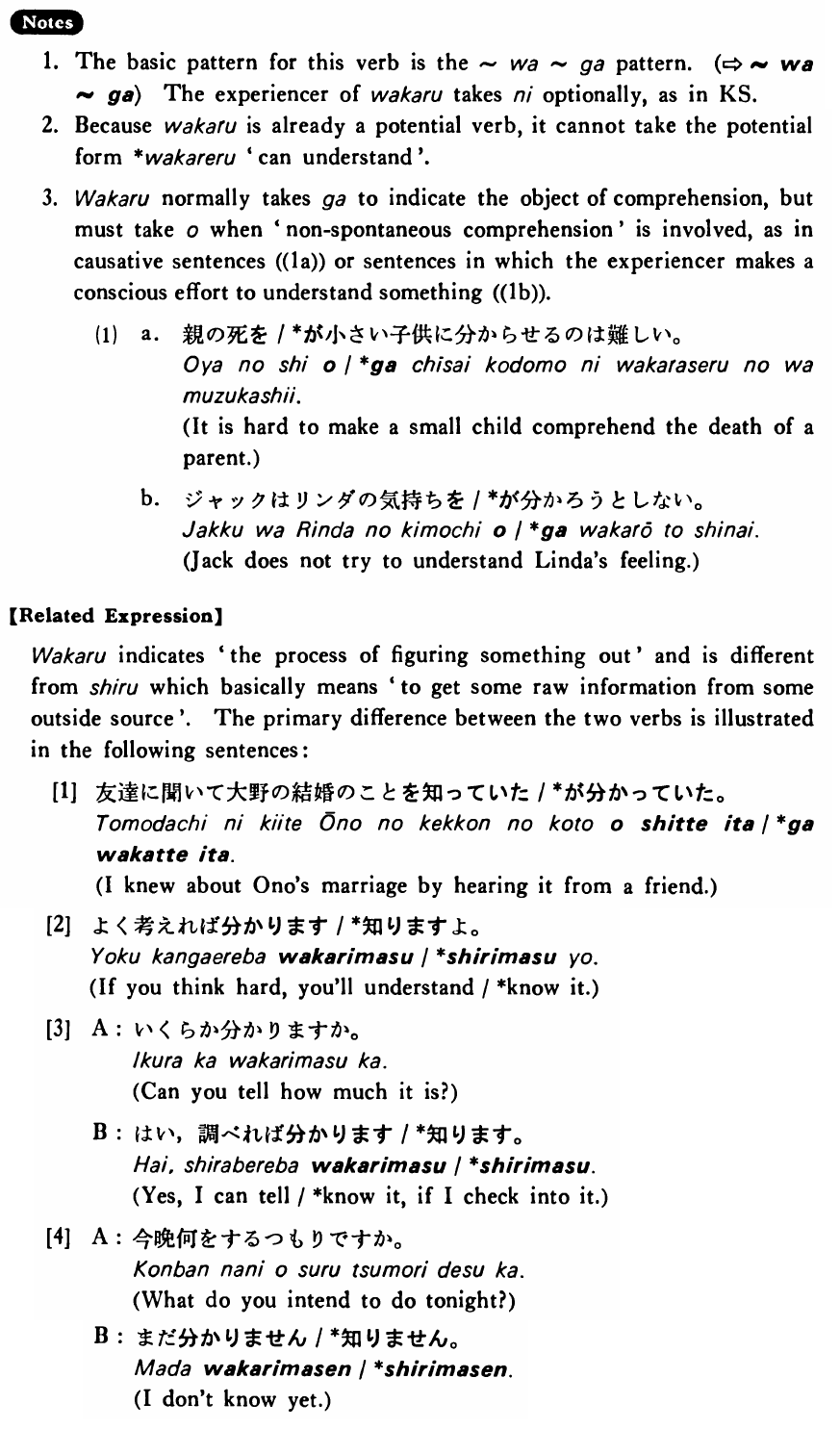
1. The basic pattern for this verb is the は~が pattern. (⇨ は~が) The experiencer of 分かる takes に optionally, as in Key Sentence.
2. Because 分かる is already a potential verb, it cannot take the potential form 分かれる 'can understand'.
3. 分かる normally takes が to indicate the object of comprehension, but must take を when 'non-spontaneous comprehension' is involved, as in causative sentences (1a) or sentences in which the experiencer makes a conscious effort to understand something (1b).
【Related Expression】
分かる indicates 'the process of figuring sometning out' and is different from 知る which basically means 'to get some raw information from some outside source'. The primary difference between the two verbs is illustrated in the following sentences:
[1]
[2]
[3]
[4]